D2R Reimagined
Large Diablo II: Resurrected overhaul mod that keeps the vanilla soul while adding new content, balance changes and quality-of-life systems.
Reviewed Active
ReMoDDeD is a large Diablo 2 Resurrected overhaul mod that rebuilds character progression, skills, itemization, crafting, monsters, bosses and endgame content. Rather than adding a few isolated quality-of-life options, it changes many of the systems that define how a D2R character is developed and equipped.
The project retains the recognizable combat, classes and loot-driven foundation of Diablo II: Resurrected, but it is not intended to reproduce the retail experience. Thousands of edited files support new abilities, equipment, areas, interface elements and progression mechanics. Experienced players should expect to reconsider familiar assumptions about builds, gearing and endgame farming.
The overhaul remains in beta development. Its major systems are playable, but balance values, recipes, compatibility requirements and individual features may continue to change before a final 1.0 release.
Character development is expanded through redesigned skills, new visual effects and equipment-granted Open Skills. These abilities are not restricted to the normal class skill tree and can interact with existing class mechanics, creating combinations that are impossible in the retail game.
Animated skill previews and custom information panels help explain unfamiliar abilities inside the game. Infinite respec support also makes experimentation less punishing, allowing players to test different paths as they discover new items and mechanical interactions.
The later Single Player build introduced Limit Breaking, extending the maximum character level to 125. Progress beyond the traditional cap requires more than ordinary experience farming and is connected to additional objectives. The Mythos Log charm records kills and deaths over the lifetime of a character, allowing long-term performance to influence bonuses or penalties.
Itemization is one of the largest parts of the overhaul. Hundreds of new Unique, Set, Runeword and class-specific items expand the available loot pool. Equipment can provide unfamiliar properties, skills and mechanical interactions rather than simply improving retail statistics.
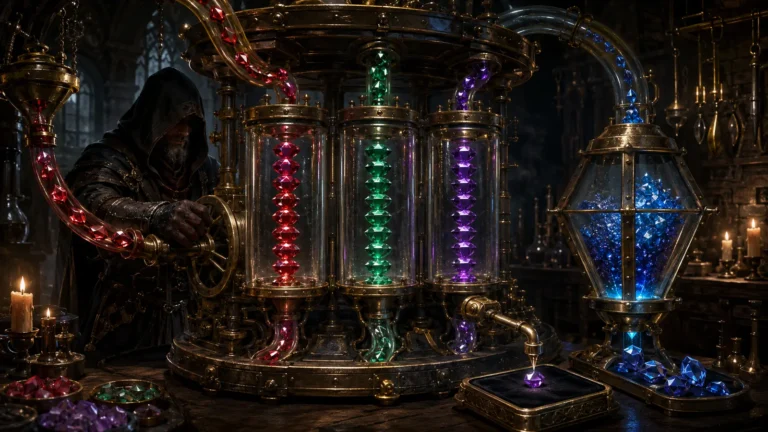
Enhancement Crystals allow selected properties to be added to equipment while increasing the item’s level requirement. This creates additional customization without making every upgrade free of consequences. Excessive enhancement can raise the requirement beyond the current character level and make the item temporarily unusable.
Blood Contracts recycle unwanted Set and Unique items into resources that can generate a new item for a matching equipment slot. Gloves produce another pair of gloves, while weapons, armor and jewelry follow the same slot-based logic. Duplicate drops therefore retain value even when they are not useful for the active build.
Forsaken Pacts use completed sets as ingredients for stronger combinations that cannot drop normally. Runic Forging upgrades existing runewords into higher tiers, while Jeweled Runewords allow jewels to occupy additional sockets before the required rune sequence is completed.
The 0.9.9.9-series development also introduced Demon Tempering. Special monster body parts can be combined with selected Unique items to create equipment with the new Tempered quality. Together, these mechanics turn crafting and item recycling into long-term progression rather than a small collection of optional recipes.
Personal and shared storage have been expanded to support the much larger item database. The standard configuration provides one personal and seven shared stash tabs, giving players eight tabs in total.
The Quality of Life Bag stores commonly used materials such as gems, runes, Uber keys, organs and Full Rejuvenation Potions. It also interacts with Blood Contracts and selected reroll systems, reducing the need to arrange large collections of materials manually.
Additional space does not remove every inventory decision. Active charms contribute to a Dynamic Charm Weighting system. Carrying too much weight can apply penalties, while travelling below the limit may provide benefits. Capacity can be expanded through character statistics, special items and recipes.
The custom dark interface reduces screen clutter and reorganizes important panels. In-game information menus provide access to runewords, recipes, skill previews and mechanical explanations without requiring players to leave the game for every reference check.
Mercenaries receive additional skills, unique auras and access to all equipment slots. They can be developed for support, regeneration, movement speed, elemental coverage or direct damage instead of serving only as an aura carrier.
Single Player includes the more ambitious Soul Summons system. Players can unlock and develop summoned versions of all seven Diablo II classes. These allies use their own abilities, adapt to the class controlled by the player and become stronger through a long-term tier system.
Upgrading all seven allies requires a large supply of Soul Shards, turning the system into account-level progression shared between characters. Soul Summons are restricted to Single Player for balance reasons and are not part of normal TCP/IP multiplayer.
The overhaul changes enemy behaviour as well as player power. Monsters may use new attacks, stronger projectiles, auras, buffs and adaptive mechanics. Some enemies strengthen nearby allies after death, while others gain additional abilities or more dangerous projectiles as their level increases.
Champion and Unique enemies are intended to be more threatening than their retail equivalents. Custom bosses use their own encounter mechanics and loot tables, making defensive statistics, positioning and movement more important than during ordinary campaign farming.
These changes are designed to support the expanded build and equipment systems. Greater character power is balanced by enemies that can punish weak defenses or careless teleportation rather than relying only on increased health totals.
The principal endgame activity is Torment Trials, which contains 50 levels divided into two groups. Twenty-five Torment Levels use randomized layouts and restrict line-of-sight teleportation. Twenty-five Icy Hell Levels use static layouts, endgame bosses and different teleport rules.
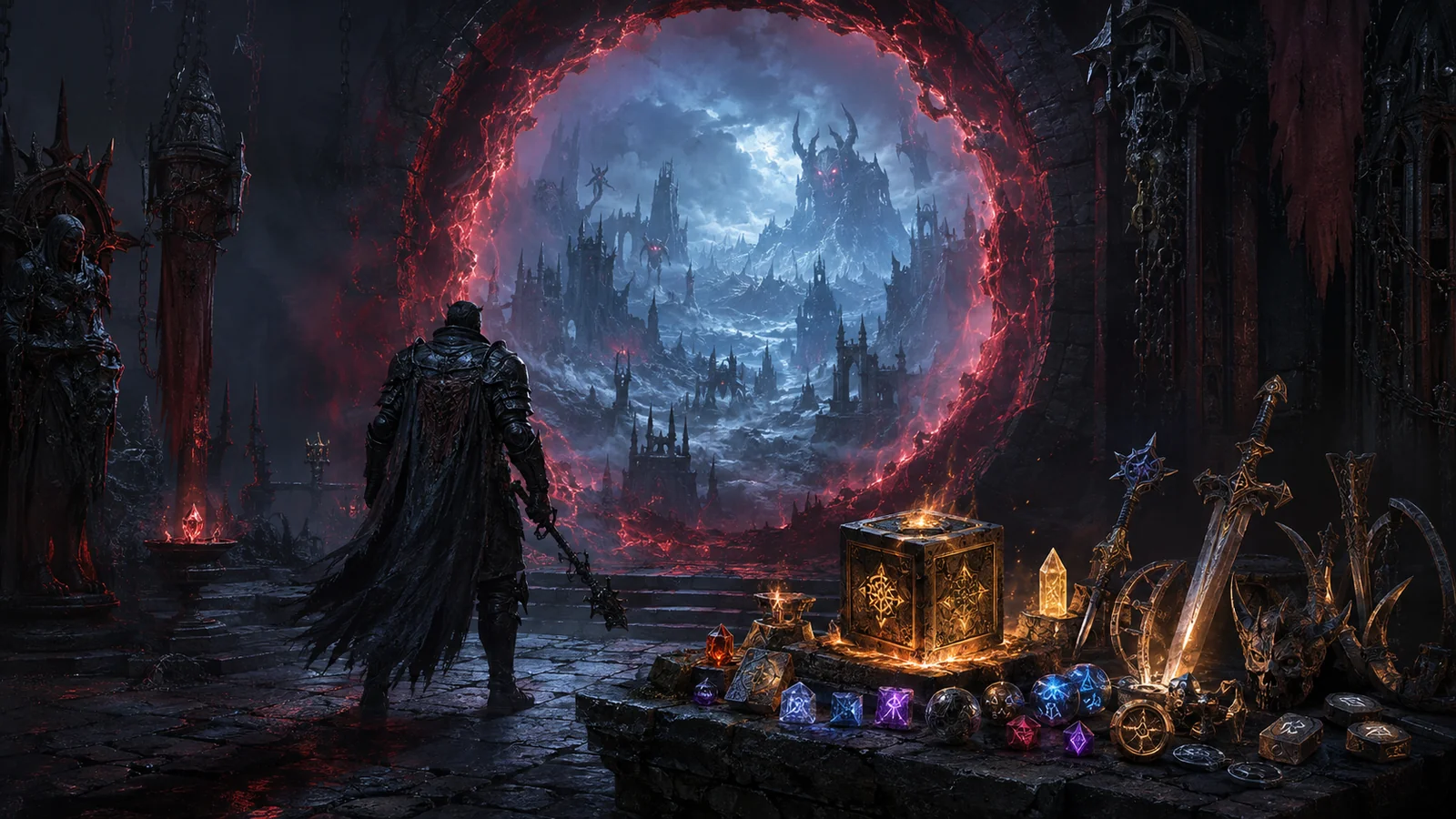
A developing mapping system adds repeatable customized areas. Endgame monsters can drop map-related items that open red portals. Maps may roll properties affecting monsters, rewards and the player, while their locations and visual themes can change between runs.
The Horadric Rift Shop provides another use for accumulated materials. Its rewards rotate and may include upgrades, valuable equipment or exclusive bonuses. Certain purchases may require specific kill, death or progression conditions in addition to their material cost.
Launcher-managed special events can temporarily modify drops, replace enemies or introduce seasonal Rift Shop rewards. These events are separate from an official Battle.net ladder and depend on the project’s own launcher infrastructure.
The project uses separate distributions for Single Player and multiplayer. Single Player is managed through D2RLaunch, while TCP/IP multiplayer uses D2RLAN and a separate D2R 2.4-based environment capable of supporting additional hardcoded functionality.
TCP/IP allows friends with matching installations to play together, but it is not a Battle.net server. The project does not provide an official ladder, central public realm or global trading economy. Every participant should use the same multiplayer build before connecting.
Characters and shared stash files should remain separate from retail D2R and other overhaul projects. The modified skills, items and save-related data mean that moving characters directly between unrelated installations can produce missing equipment, invalid statistics or broken progression.
Players looking for a ReMoDDeD download should use the developer’s launcher workflow rather than treating the project as a standard D2RMM addon. D2RLaunch and D2RLAN can download, install and update supported files while maintaining separate configurations.
The project should not be installed through D2RMM. It is a self-contained overhaul with its own launchers, game files and save paths. Compatibility should be checked again after any major Diablo II: Resurrected update.
As of August 30, 2026, the official Single Player repository identifies its public build as 0.9.9.9BA. The separate TCP/IP repository identifies the multiplayer build as 0.9.9.9GG, dated March 20, 2026.
The older Nexus Mods listing displays a 0.9.9.8-series version. The developer explains that Nexus is not updated for every mod or launcher release, so its header should not be treated as the definitive current version. D2RLaunch, D2RLAN, the official repositories and Discord are more relevant sources for current compatibility.
This project is best suited to players who want an expansive and less predictable version of D2R. Its appeal comes from build experimentation, unfamiliar loot, layered crafting, difficult monsters and dedicated post-campaign progression.
The large number of mechanics can be demanding for someone looking only for a lightly adjusted campaign. Players who want a larger stash, simple loot filter or small balance change can find more focused options in the D2 Horadric mod directory.
Those looking for an overhaul that stays closer to the original structure can also compare it with D2R Reimagined. The two projects target different levels of change rather than functioning as interchangeable addon collections.
No. Modified characters and game files are not intended for official Battle.net play. Single Player is local, while supported multiplayer uses TCP/IP through D2RLAN.
Yes. The separate multiplayer build supports TCP/IP games through D2RLAN. Every player needs a compatible installation and the same release version.
The latest publicly confirmed builds are 0.9.9.9BA for Single Player and 0.9.9.9GG for TCP/IP multiplayer. The version displayed at the top of the Nexus page is older.
Retail and other mod characters should not be copied directly into this installation. New characters or an officially supported conversion process are the safer options.
No. Single Player uses D2RLaunch, while TCP/IP multiplayer uses D2RLAN. This is a complete overhaul rather than a modular D2RMM addon.
Yes. Major systems are playable, but balancing, compatibility, recipes and endgame features may continue to evolve before version 1.0.