Project Diablo 2
Project Diablo 2 is a seasonal Lord of Destruction mod with rebalanced builds, item corruptions, maps, dungeons, new endgame encounters and an…
Verified Active
Path of Diablo is a global Lord of Destruction community server focused on build diversity, seasonal progression, maps, relics, item corruptions and quality-of-life improvements while remaining close to vanilla D2.
Path of Diablo is a community-developed LoD ladder server and mod designed to increase build diversity and replayability without replacing the recognizable Diablo II foundation. The original seven classes, campaign and item hunt remain familiar, but weaker skills, underused equipment and late-game progression receive changes. Players share one online realm and economy while selecting regional game servers for better latency. This is a legacy Diablo II and Lord of Destruction project, not a Diablo II: Resurrected server.
The project follows a “vanilla-plus” direction rather than becoming a total conversion. Many skills retain their original role but gain improved scaling, revised cooldowns or mechanical changes that make additional builds practical in Hell. Other abilities have been replaced or expanded where numerical buffs were not enough. Unique items, sets and runewords are also adjusted to create more gearing choices. The campaign still feels like Diablo II, yet players should check skill descriptions instead of assuming a Battle.net build works unchanged.
Melee, ranged, caster, summon and hybrid characters all benefit from the broader design space. Patch changes have introduced new skills, alternate skill functions and build-enabling item modifiers while preserving familiar class identities. Cube recipes support crafting and item upgrades, and some Diablo II: Resurrected runewords have been adapted with different effects or balance values. Because the Path of Diablo server maintains its own ruleset, players should verify recipes in the official patch notes before using valuable runes or bases.
The Orb of Corruption adds one of PoD’s defining item systems. An eligible item can gain a new corruption affix, receive sockets, become a random rare or remain unchanged. Most items can be corrupted only once, so using an orb on a valuable unique creates a choice between keeping an item and gambling for a stronger result. Corruption also interacts with relics, where it can increase monster density and experience while adding difficult modifiers. This system keeps familiar LoD equipment relevant while creating rare, tradeable outcomes beyond ordinary perfect rolls.
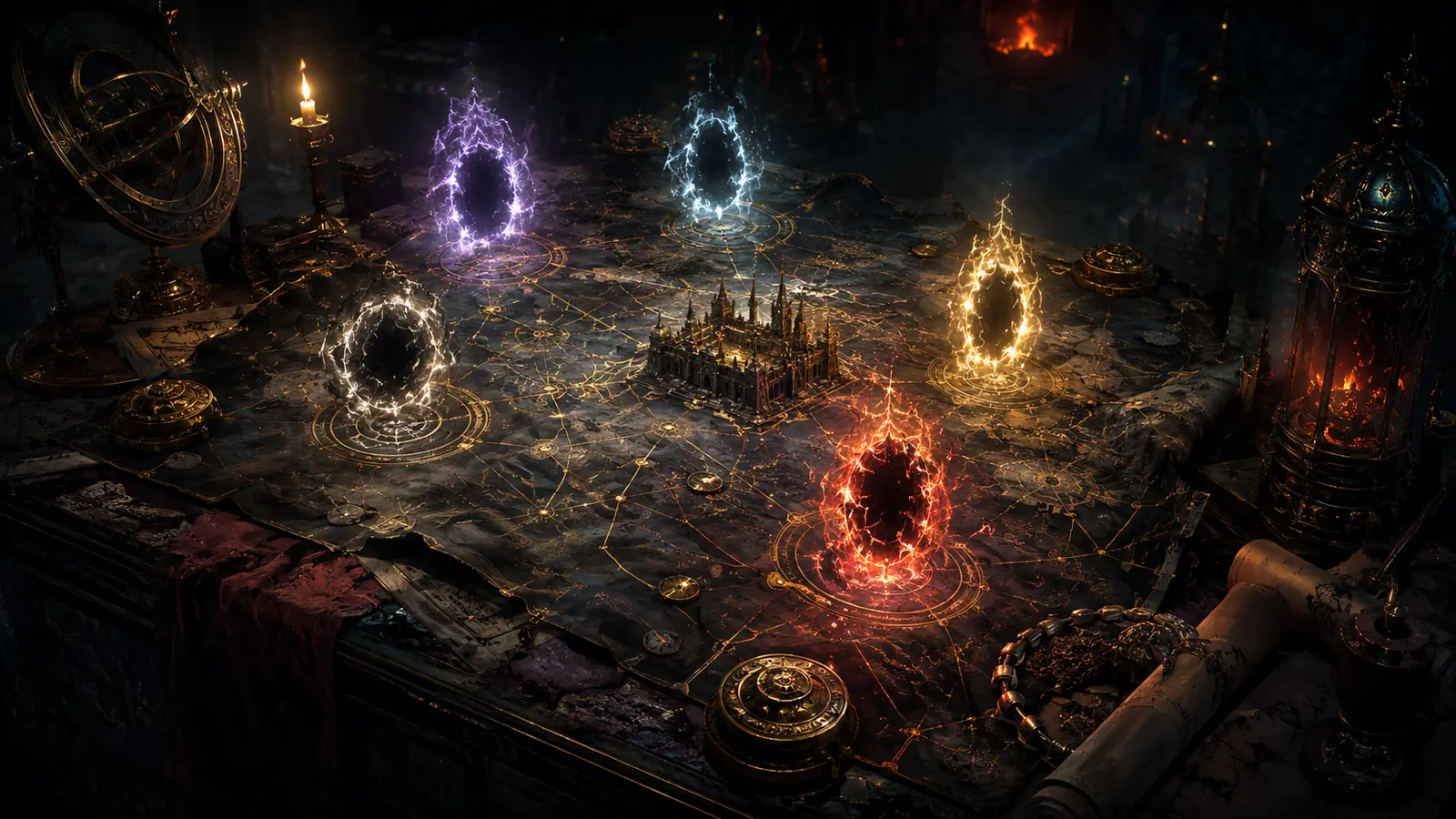
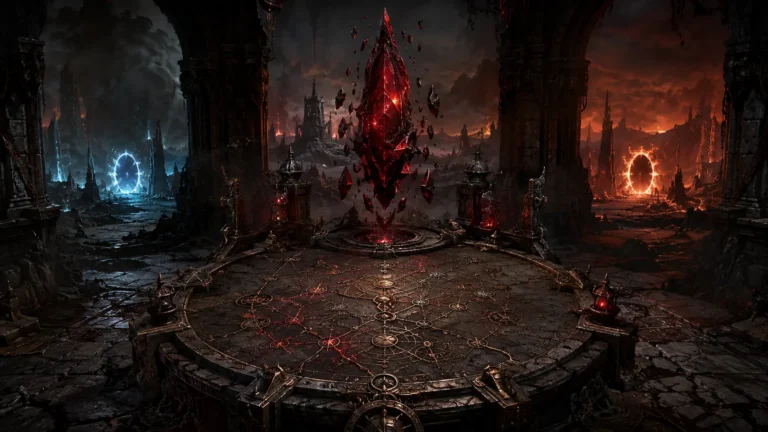
Relics extend progression beyond repeated Chaos Sanctuary and Baal runs. They drop in Hell and open portals from an altar in Harrogath after a level 80 character completes Rite of Passage. White, yellow and red tiers represent increasing area levels and intended difficulty, from a challenging solo zone to content designed for stronger groups. Relic affixes may empower monsters or weaken players in exchange for more experience and density. Bosses, varied layouts, corruption and relic rerolling give mapping characters an endgame with more decisions than campaign farming.
Traditional key farming and Uber Tristram remain important, while the project’s custom Diablo Clone encounter adds another demanding objective. Mapping, high-rune farming, valuable corruptions and optimized boss characters provide reasons to keep improving after the campaign. A fast map-clearing build may not be the safest choice for Ubers, so some players maintain separate specialists for farming and bosses. Increased drop availability and the expanded endgame reduce dependence on a single route without eliminating the value of rare equipment or careful character planning.
The current official wiki and 2026 loot-filter listings still identify Patch #22 Minium, introduced with Season 13, as the public ruleset. Minium reworked relic monster pools and tiers, returned Synthesized weapons, expanded crafting and continued skill and item balancing. A separate map beta began in January 2026, showing that further changes are being tested. However, players should not assume a fixed four-to-five-month reset schedule: confirm the active season, beta status and any announced reset through the official portal immediately before starting.
All characters participate in one realm, Ladder and economy, but game creators can choose from the project’s regional server locations. This allows players in different countries to trade and compete together while using a nearby host for normal farming. Website tools provide Ladder information, public games, character inspection, trade listings and item search. Global chat also connects games across the realm and can relay through Discord. Public population changes over a long season, so live server and public-game pages are more reliable than historical peak claims.
A dedicated charm area lets characters carry power charms without sacrificing the full pickup inventory. The enlarged stash, fast item-transfer shortcuts, stash search, item comparison and longer-lived games make muling and organization easier. Community loot filters can be installed through the launcher and optionally updated automatically; current filters may also use notification levels and sounds. Server rules prohibit bots, unauthorized maphacks and multiclienting, so convenience tools should come from the official Path of Diablo website or its approved documentation.
Path of Diablo requires legitimate English installations of legacy Diablo II and Lord of Destruction. Install both games first, download the official launcher, select the correct Diablo II directory and start the mod through that launcher for updates. Traditional offline single player is not supported, although a player can create a private online game and progress alone. Follow the official download instructions rather than third-party repacks. For a larger seasonal overhaul compare Project Diablo 2; for a full conversion see Median XL; and for a more traditional community realm review SlashDiablo.