Path of Diablo
Path of Diablo is a global Lord of Destruction community server focused on build diversity, seasonal progression, maps, relics, item corruptions and…
Verified Active
Project Diablo 2 is a seasonal Lord of Destruction mod with rebalanced builds, item corruptions, maps, dungeons, new endgame encounters and an active global community.

Project Diablo 2, commonly known as PD2, is a free community-developed mod and online server for the classic Diablo II: Lord of Destruction. It preserves the atmosphere and core progression of the original game while continuing its development through regular seasons, balance updates and new content. It runs on the original Lord of Destruction, not Diablo II: Resurrected — players still progress through the familiar campaign and difficulty levels, but builds, items and endgame activities are significantly expanded. If you are still comparing options, PD2 sits alongside the other projects in the wider servers directory.
PD2 runs on seasonal ladder resets that give everyone a fresh economy and a new progression race. The current season is Season 13: Betrayal, which launched on 24 April 2026; returning players should read the Season 13 patch notes before choosing a build. The project describes its reset cycle as roughly every four to six months, though the exact schedule can vary.
At the start of a season every player begins without accumulated ladder gear, which drives active early trading, group progression and competition for high ladder places. Each season also revives the Hall of Heroes, recording the first three players of each class to solo Diablo Clone or reach level 99.
PD2 keeps the recognisable Lord of Destruction feel while modernising systems that had become limited in the original. Its major features include:
The changes are extensive, but the game still feels closely tied to classic Diablo II rather than becoming a separate action RPG. Players who want a far more radical overhaul usually look at a total conversion such as Median XL instead, while those after a lighter, more familiar ruleset often compare it with SlashDiablo.
Ladder is the seasonal mode: progress resets each season, so everyone starts fresh and competes on the season ladder. Non-ladder keeps progress between seasons and suits long-term or casual play and PvP; there are currently no gameplay differences beyond the reset. Singleplayer is fully supported, and singleplayer characters can play together over TCP/IP on a local network. Classic (non-expansion) and Open Battle.net modes are not supported, since PD2 is built specifically on Lord of Destruction.
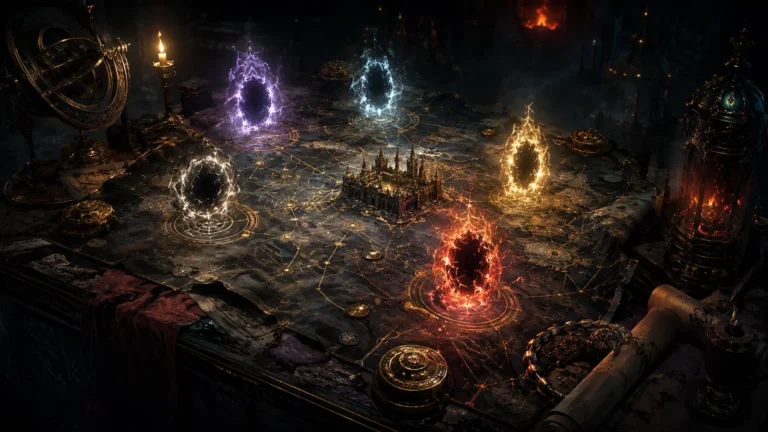
The original campaign stays relevant, but reaching Hell and defeating Baal is no longer the end. Maps are special items that open high-level areas with new layouts, monsters and modifiers, giving an alternative progression path that can be improved or corrupted for extra difficulty and rewards. If you have played the mapping loop in Path of Diablo, the idea will feel familiar, though PD2 implements it in its own way.
PD2 also expands the roster of endgame bosses, which demand stronger characters, proper defences and more specialised gear than standard campaign content. Because skills and items are regularly reviewed, far more builds can reach endgame than in the original Lord of Destruction.
PD2’s seasonal economy is built around self-found drops, crafting and player-to-player trading. Items can be listed through the official trade site, but exchanges are completed in game; third-party marketplaces and real-money trading are prohibited. High runes and other scarce materials commonly act as trade currency, while an item’s value depends on the current season, build demand, sockets and its corruption result.
Crafting gives useful item bases another progression path through recipes that create equipment with predictable families of bonuses and variable final rolls. Worldstone Shards can corrupt eligible items or maps, potentially adding a useful modifier or sockets while also carrying the risk of an unwanted result. Because an item cannot be corrupted twice, players must decide whether to use it, trade it or risk changing it. The official Recipes and Corruptions pages should be checked for current details because recipes and item pools can change between seasons.
PD2 may suit players who:
PD2 is free, but it requires legitimate copies of both Diablo II and Diablo II: Lord of Destruction purchased from Blizzard and installed in English. The basic installation process is:
Always use the official download page — never an unofficial mirror — for the current installer.
Before playing, review the official PD2 rules. Bots, maphacks, real-money trading, account sharing and unauthorised third-party software are prohibited, and multi-clienting is restricted; players sharing one connection may need the project’s whitelist procedure. These rules can change, so check the official version rather than older community posts.